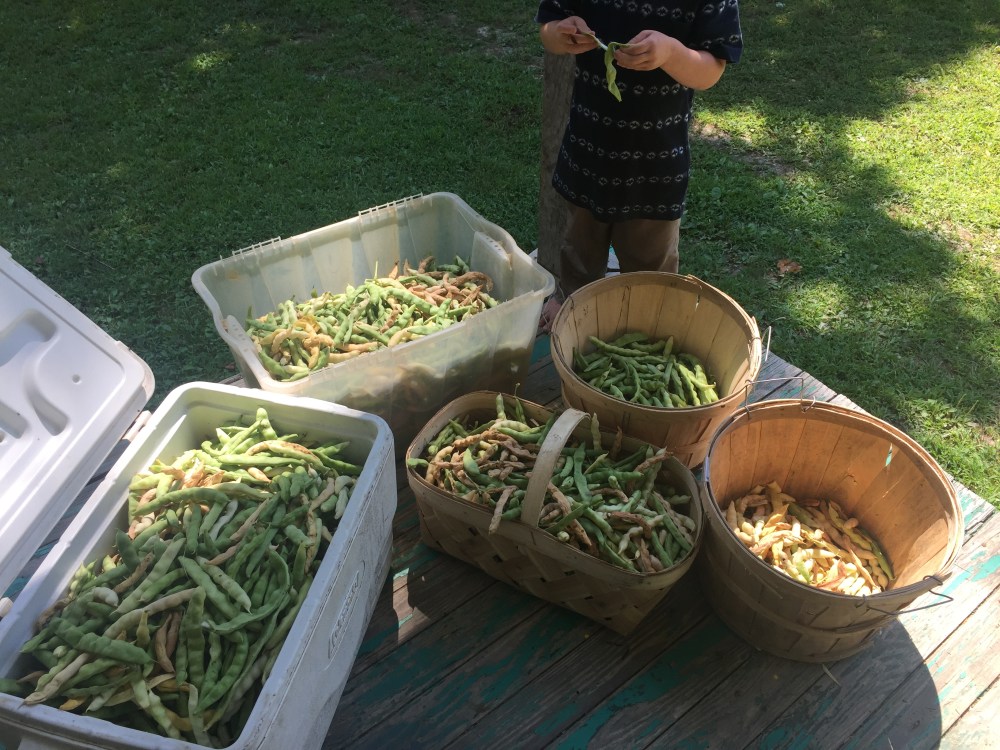
We unfortunately did not get enough garden in for green beans this year. Our focus was on tomatoes, hot peppers, and winter squash, so we were very grateful to be blessed with these beans from our neighbors. These are goose beans, which are said to have got their name from early settlers who found the beans in the craw of goose. This makes me wonder if they were starving so badly that they couldn’t let the seeds go to waste, or if they just wondered what the goose had found to eat. We just cannot tell.
These beans may look different from what you’re used to seeing. Green beans picked for the big stores are typically smaller and stringless. Homegrown green beans, at least around here, are usually larger and picked when there is a noticeable bean in them. I prefer them this way, it makes them more of a meal than just a side dish.
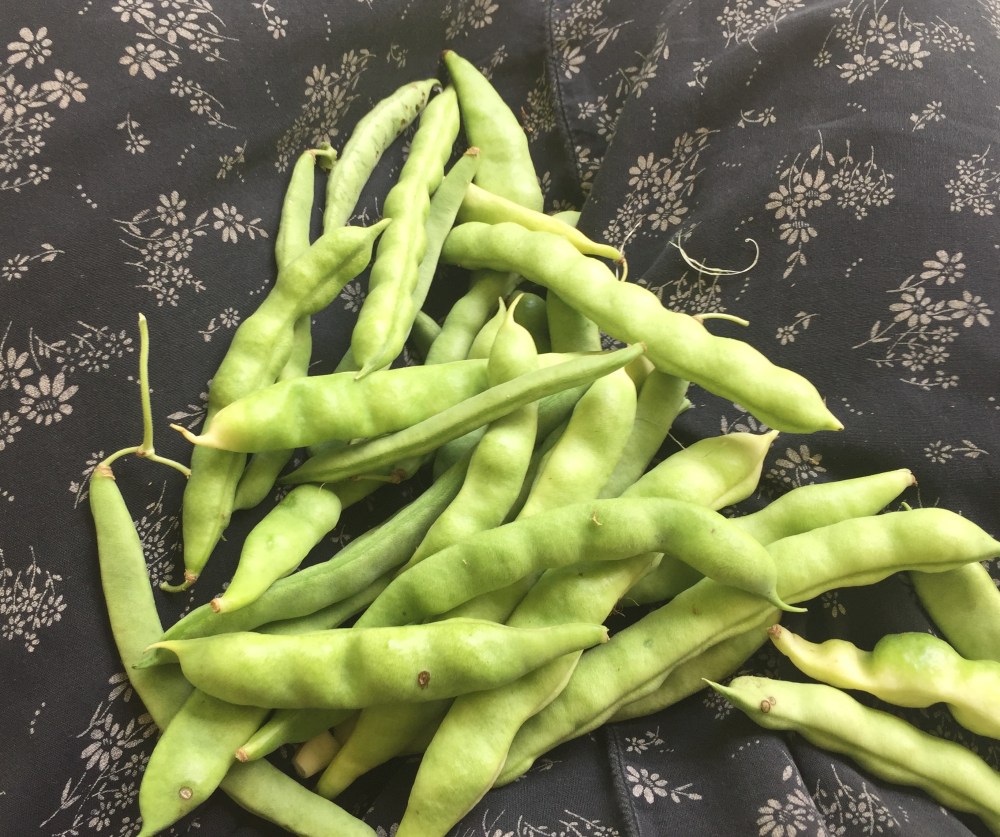
So first we’re going to sort the beans. Some of these beans have started to yellow and dry. This doesn’t mean they’re bad, it just means they’re a different food now. These are the beans you shuck and use for soup beans. We’ll lay them out in the sun to dry further and shell them in a few days.


Once the beans are sorted we snap the ends off to string them. You don’t need to take very much off, just the last little tip, and then you can pull the strings off. The strings are tough and won’t get much softer with cooking, so we try to get all the string off. Next break the beans into short lengths. One inch or less is best. This will let you get the most in a jar that you can, and make it easier to dump them out if you’re using small mouth jars.
The beans will keep freshest cold, so it is best to put them in fridge if possible until you are ready to can them.
 Cumberland Falls Farm
where can I get some Shuck bean seeds
do they go by any other name ?
LikeLike
In this article we were using goose beans, but any mature bean will work. Shuck bean refers more to the process than the type of bean. In this case I was referring to shucking mature beans to make soup beans, typical soup beans are pintos, or great northerns. Other people use shuck bean to refer to leather britches beans, which is where the green (immature) bean is air dried on strings and then stewed. Probably the most common bean for this is white half runners, but I deviate from tradition here and prefer blue lake poles because they are larger and stringless.
LikeLike